Research
We lead in pedagogical research, advancing distance learning globally with innovative technology. For over 50 years, IET has established new ways for innovative technology to improve practices for learning, teaching and industry.
Programmes

AI, Learning Analytics & Design
Innovation in online and distance learning, teaching and assessment at the intersection of AI, Learning Analytics, and Learning Design.

Digital Education for Sustainability
Researching digital education that supports informed decision-making and action in response to the climate crisis.

Digital Participation, Social Justice and Equitable Learning
Enabling community engagement and participation in scientific research through innovative technologies and methodologies with the aim to develop critical literacies, impact policy and foster social justice.

Digital Health, Wellbeing, and Learning
Innovating at the intersection of digital health, wellbeing and learning for improved health outcomes.

Future of Work and Professional Development
A cross-university team led by IET, exploring how education, work, and technology intersect, preparing learners and professionals for AI-shaped futures.

Immersive, Inclusive and Embodied Learning
Exploring immersive, and spatial technologies to augment human learning and intelligence, embed skills in context, and advance equitable and inclusive learning futures.

Open Education Research Hub
Learning from worldwide perspectives on the technologies, ecosystems, practices and values shaping openness in education.
Projects
Research Capability Hub
This project will develop a new Hub for delivering social science research skills training courses, transforming researcher's development training, enhancing accessibility and inclusion, and fostering community engagement of social science researchers across the UK.
Peace of Mind
An innovative youth mental health and wellbeing programme that will enhance emotional resilience in children and young people aged between nine and 25 in Northern Ireland and the border counties of Ireland.
Every1
The Every1 consortium brings together leading experts in energy, education, energy ecosystems and the social sciences to enable all European stakeholders to participate effectively in the digital energy market.
Augmented and eXtended reality in higher education
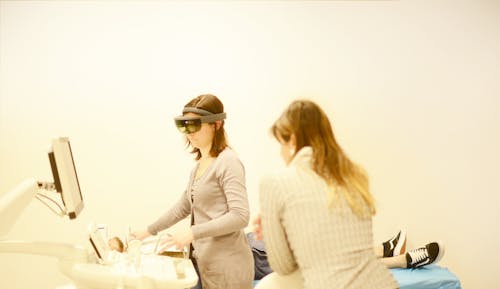
OU’s augmented reality learning ecosystem project wins EU standards+innovation award
The ARETE project received the CEN/CENELEC Standards+Innovation Award 2022 for Best Research Project. Congratulations to IET and the connected consortium of international partners.
Editorial
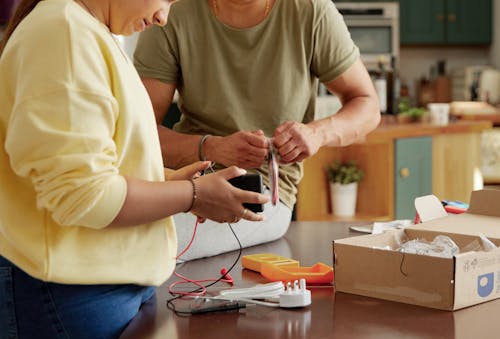
OU's MirageXR learning tool bridges gap in cognitive processing
Mirage XR, the flagship cross-platform augmented reality (AR) app for industrial training and educational course creation.
Editorial
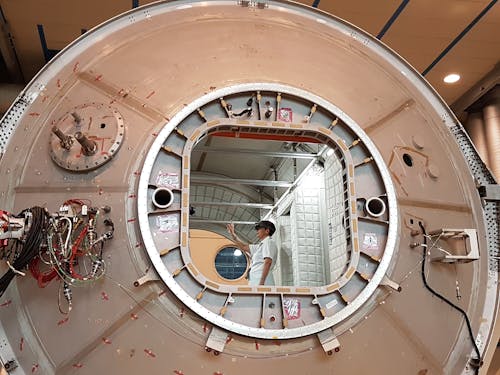
A hybrid lab meeting focused on Augmented Reality
IET hosts the first face-to-face meeting of the Performance Augmentation Lab (PAL), with researchers presenting on their research projects, exploring mixed reality and technology-enhanced learning.
Editorial
Chatbots for Accessibility

OU launches new chatbot for students to disclose disabilities with ease
Educational technologists at The Open University (OU) have developed a virtual assistant chatbot with artificial intelligence technology to support students to disclose disabilities and access information with ease.
Editorial

Facilitating student consultation to enhance inclusion
The ADMINS research project is working with students at the OU.
Editorial

Intuitive chatbots in the HE sector
Chatbots and virtual assistants are becoming a widely used tool to support people access information.
Thought leadership
Digital Badges and Covid-19

Digital Badges and COVID-19: upskilling at a distance
Digital Badges can support teaching challenges faced during Covid-19.
Thought leadership

Digital Badges and COVID-19: Advancing TPD
IET are using digital badges to improve teacher professional development in India.
Editorial

Digital Badges and COVID-19: Enhancing assessments
The Covid-19 pandemic has prompted the need for immediate, innovative solutions to improve assessments.
Editorial